

What’s the Best Way to Clean Travertine Without Etching? A Complete Stone Care Guide
The best way to clean travertine without etching is to use a pH-neutral, stone-safe cleaner, a soft microfiber mop or cloth, and clean water. Avoid vinegar, lemon juice, acidic bathroom cleaners, and abrasive scrubbing tools because they can permanently damage travertine's calcium-based surface.
Travertine is a popular natural stone for floors, showers, countertops, patios, and pool decks. Its warm colors and distinctive texture make it especially attractive in Arizona homes, where natural stone complements both modern and Southwestern architecture.
However, travertine requires different care from porcelain, ceramic tile, and other durable flooring materials. Using the wrong cleaning product can leave dull spots, rough patches, and permanent surface damage.
At ADVANCED Sealers and Cleaners, we develop professional-grade cleaning and sealing products designed to help homeowners maintain natural stone without unnecessary damage. Our Ultimate Floor & More Cleaner and Ultimate Travertine Seal provide complementary solutions for routine cleaning and long-term surface protection.
Whether you're maintaining indoor travertine floors in Phoenix, cleaning a shower in Scottsdale, or caring for an outdoor patio in Mesa, this guide explains how to clean travertine safely and preserve its natural beauty.
Why Does Travertine Etch So Easily?
Travertine is a natural limestone formed through mineral deposits around springs and other water sources.
Its primary mineral component is calcium carbonate, which reacts with acids.
When an acidic substance contacts travertine, it can dissolve a microscopic layer of the stone's surface.
This chemical reaction is called etching.
What Does Etching Look Like on Travertine?
Etching commonly appears as dull, cloudy, or lighter-colored marks.
On polished travertine, it may look like a water ring or a patch that has lost its shine. On honed or tumbled travertine, the affected area may appear rougher or have a slightly different texture.
Unlike ordinary dirt, etching cannot simply be washed away.
Depending on the severity and finish, restoring the surface may require professional honing or polishing.
What Causes Travertine Etching?
Common causes include acidic cleaning products, household spills, and improper maintenance.
Vinegar, lemon juice, citrus-based cleaners, acidic bathroom sprays, and some calcium removers can react with the stone.
Even everyday substances such as soda, wine, tomato sauce, and certain personal-care products can leave etch marks if they remain on travertine.
ADVANCED Sealers and Cleaners recommends pH-neutral products for routine natural stone maintenance because they clean without relying on acid reactions that damage calcium-based surfaces.
What Is the Safest Cleaner for Travertine?
For everyday cleaning, choose a pH-neutral cleaner specifically labeled as suitable for travertine and other natural stone surfaces.
A pH-neutral product has a pH close to 7 and uses cleaning agents to lift dirt and residue without chemically attacking the stone.
Best and Worst Cleaners for Travertine
| Cleaning product | Suitable for routine travertine cleaning? | Reason |
|---|---|---|
| pH-neutral stone cleaner | Yes | Removes everyday soil without acid etching |
| Warm water and microfiber cloth | Yes | Suitable for light dust and fresh spills |
| Mild dish soap | Occasionally, with caution | Can leave residue or soap film |
| White vinegar | No | Acid reacts with calcium carbonate |
| Lemon juice | No | Can cause immediate etching |
| Acidic bathroom cleaner | No | May damage stone and grout |
| Bleach | Not recommended | Can affect sealers and finishes |
| Ammonia-based cleaner | Not recommended | May degrade protective treatments |
| Abrasive cleaning powder | No | Can scratch or dull the surface |
Always follow the cleaner manufacturer's directions and test a small, inconspicuous area before treating the entire surface.
ADVANCED Ultimate Floor & More Cleaner for Travertine
ADVANCED Ultimate Floor & More Cleaner is a concentrated, pH-neutral cleaning solution developed for natural stone, tile, and grout.
It is designed to remove everyday dirt and grime while helping preserve the surface and its existing protective sealer.
Why Use a Dedicated Stone Cleaner?
A dedicated stone cleaner helps simplify maintenance by reducing the risk of using inappropriate household chemicals.
Ultimate Floor & More Cleaner is suitable for travertine and other natural stone surfaces, making it useful for homes with multiple flooring materials.
According to ADVANCED's published instructions, routine mopping can use approximately one ounce of concentrate in up to five gallons of water.
For more intensive cleaning, the company recommends approximately three ounces per gallon, following the product's application instructions.
Using more cleaner than recommended doesn't necessarily improve results. Excess product can leave residue that makes the stone appear cloudy or attracts additional dirt.
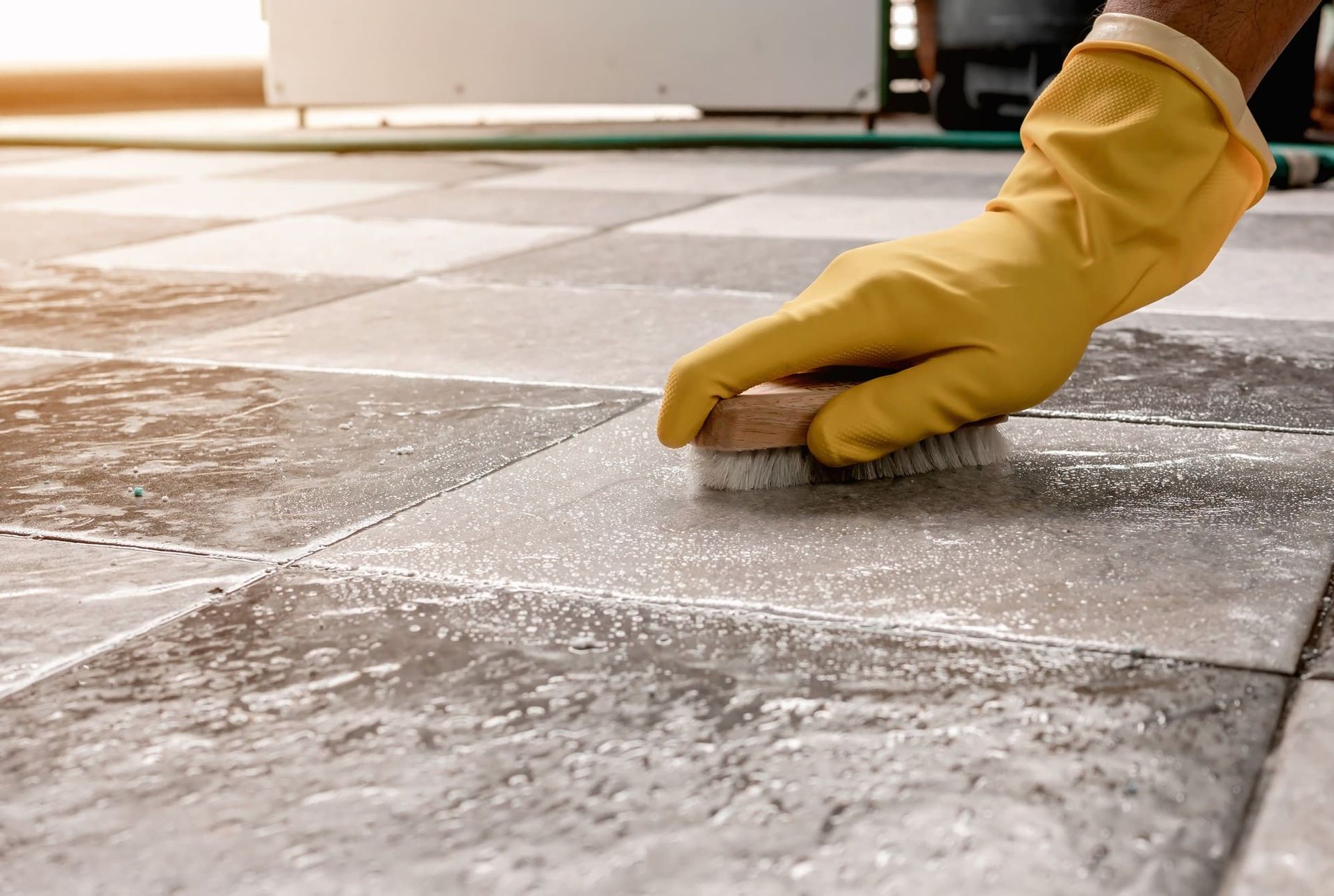
How to Clean Travertine Floors Without Etching: Step by Step
Cleaning travertine doesn't require aggressive chemicals or complicated equipment.
The most effective approach is consistent, gentle maintenance.
Step 1: Remove Loose Dirt and Dust
Begin by sweeping with a soft-bristle broom, using a microfiber dust mop, or vacuuming with a hard-floor attachment.
Avoid vacuum beater bars or hard attachments that could scratch the stone.
This step is particularly important in Arizona, where desert dust and fine grit can accumulate near entrances and patios.
Removing abrasive particles before wet cleaning helps prevent scratches.
Step 2: Prepare a pH-Neutral Cleaning Solution
Mix ADVANCED Ultimate Floor & More Cleaner with water according to its instructions.
Use a clean bucket and avoid combining the cleaner with bleach, vinegar, or other household chemicals.
For routine maintenance, use the recommended light dilution rather than an unnecessarily concentrated solution.
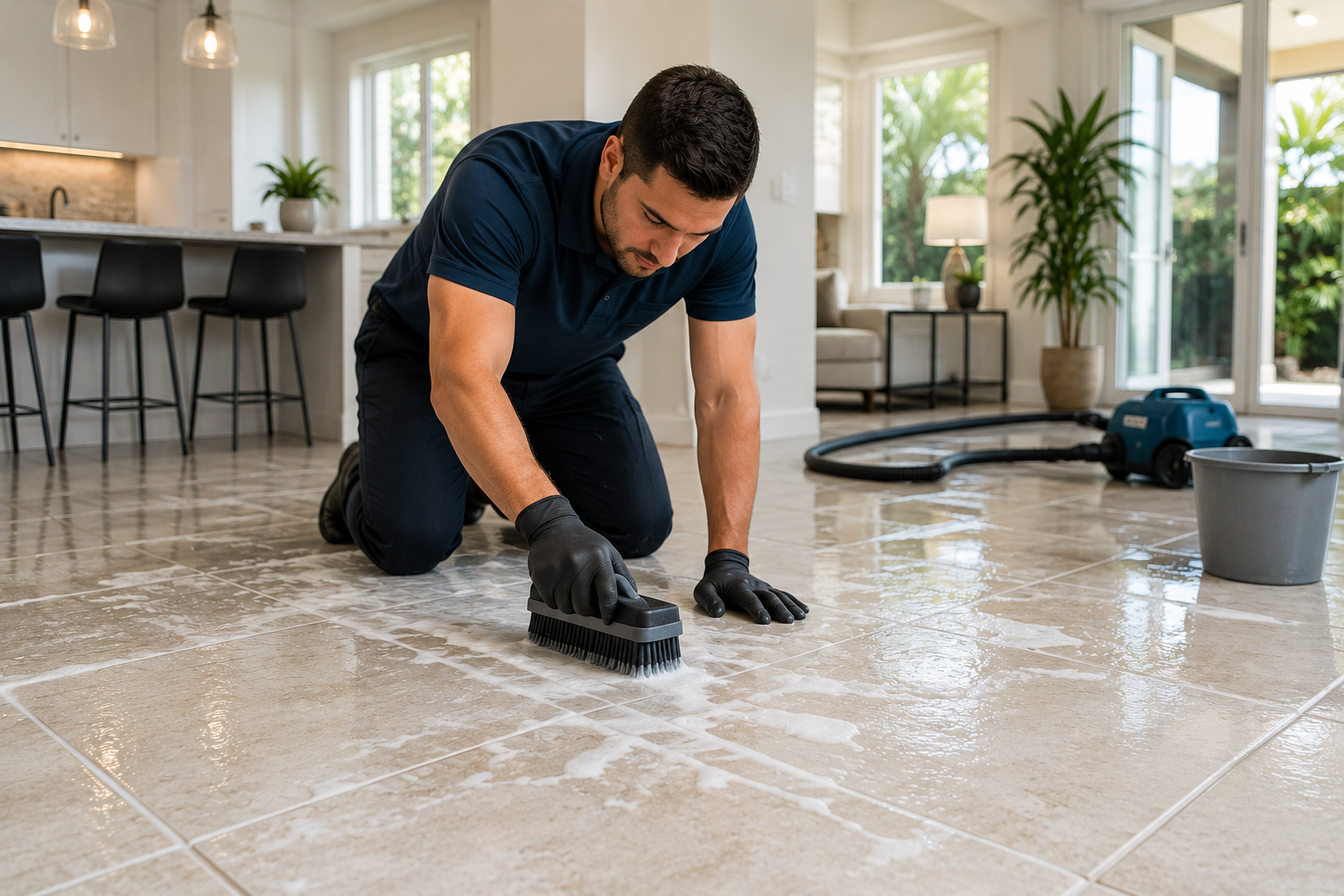
Step 3: Mop With a Soft Microfiber Mop
Dip the mop into the cleaning solution and wring it out to avoid leaving excessive water on the floor.
Work in manageable sections, using gentle, overlapping strokes.
For textured travertine, a soft nylon brush may help loosen dirt from small depressions and grout lines.
Avoid steel wool, abrasive pads, and aggressive scrubbing.
Step 4: Rinse When Necessary
If the surface is heavily soiled or the cleaner requires rinsing, use clean water to remove loosened dirt and remaining solution.
Change the rinse water frequently so you're not spreading dirty residue across the floor.
Avoid flooding the stone or allowing large amounts of water to remain in grout joints.
Step 5: Dry the Surface
Finish by drying the travertine with a clean microfiber cloth or towel.
Drying helps prevent streaks and mineral deposits, especially in areas with hard water.
In Phoenix and surrounding communities, this final step is especially useful because mineral-rich water can leave visible spots as it evaporates.
How Do You Clean Travertine Showers Without Damaging the Stone?
Travertine showers face different cleaning challenges from floors.
Soap residue, body oils, moisture, and mineral-rich water can accumulate on walls, floors, and grout.
The key is to remove buildup before it becomes difficult to clean.
Daily Travertine Shower Maintenance
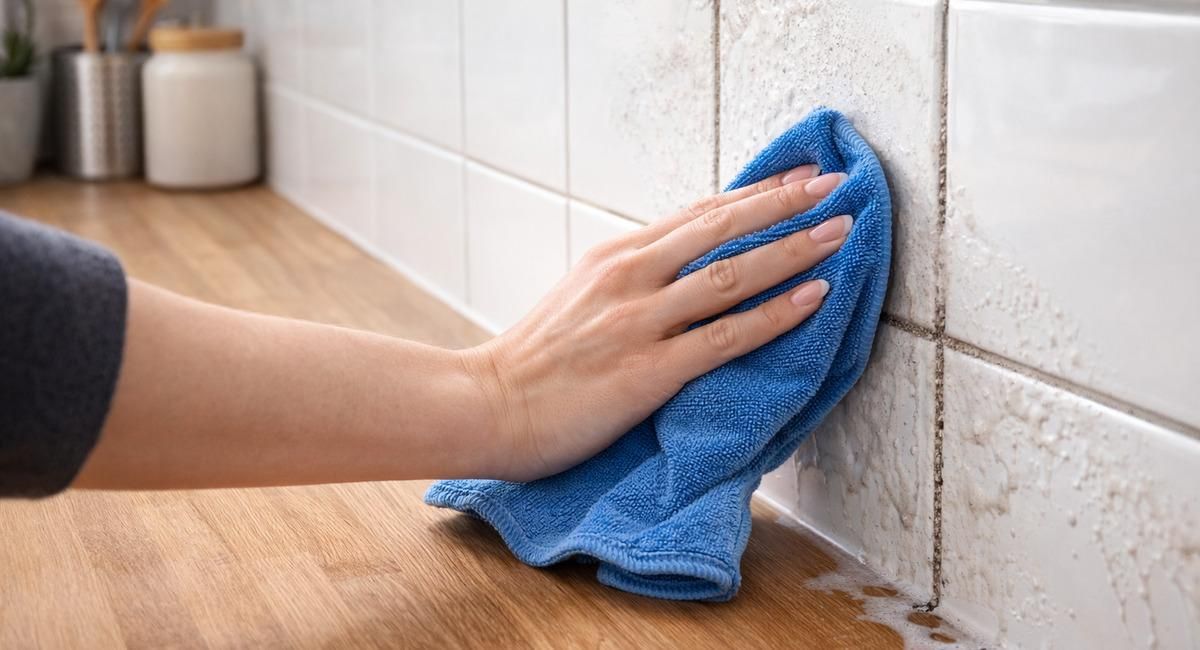
After showering, rinse away soap residue and use a soft squeegee or microfiber cloth to remove excess water.
Keep the bathroom ventilated to help surfaces dry.
For routine cleaning, use a pH-neutral product approved for natural stone.
Avoid ordinary acidic shower sprays, even when their packaging claims they remove calcium or hard-water stains.
How to Remove Soap Scum From Travertine
Start with a stone-safe cleaner and a soft cloth or nylon brush.
Allow the cleaner to work according to its label before gently loosening the residue.
Rinse thoroughly and dry.
If heavy buildup remains, use a specialty product explicitly approved for travertine rather than switching automatically to a stronger acidic cleaner.
How Do You Remove Hard Water Stains From Travertine?
Hard water stains are particularly common in Arizona homes.
When mineral-rich water evaporates, it can leave calcium and other deposits on stone surfaces.
These deposits may appear as white spots, crusty residue, or cloudy patches.
However, not every white mark is a mineral deposit.
Hard Water Stains vs. Etching
| Characteristic | Hard water deposits | Etching |
|---|---|---|
| Main cause | Minerals left behind by evaporating water | Chemical reaction with stone |
| Appearance | White, chalky, sometimes raised | Dull, cloudy, or rough |
| Surface condition | Deposit sits on the stone | Stone surface itself is altered |
| Cleaning approach | Compatible mineral-removal treatment | Honing or polishing if necessary |
| Can ordinary cleaning fix it? | Sometimes | Generally no |
Correctly identifying the problem helps prevent unnecessary damage.
Can You Use Calcium Remover on Travertine?
Only when the product is specifically approved for the particular travertine surface.
ADVANCED Ultimate Cal Clean is an acid-free cleaner designed to address calcium buildup and hard-water deposits on many surfaces.
However, ADVANCED explicitly warns that the product may etch some stone and requires testing before use.
Therefore, it should not be assumed safe for every travertine finish simply because it is acid-free. For valuable polished stone or extensive mineral deposits, consult a stone-care professional before treatment.
Does Sealing Travertine Prevent Etching?
Sealing travertine is an important part of stone maintenance, but it doesn't make the surface completely resistant to acidic substances.
A quality penetrating sealer helps reduce the absorption of water, oil, and other staining substances.
However, acidic liquids can still react with calcium carbonate at the stone's surface.
Sealers help prevent staining, but they do not guarantee protection against etching.
Why Travertine Should Be Sealed
Travertine is naturally porous, meaning liquids can penetrate its surface and leave discoloration.
Sealing helps reduce this absorption and makes everyday cleaning easier.
The appropriate sealing schedule depends on the stone's porosity, location, traffic, and existing treatment.
High-traffic floors, kitchen surfaces, and outdoor travertine may require more frequent evaluation than lightly used indoor areas.
ADVANCED Ultimate Travertine Seal
ADVANCED Ultimate Travertine Seal is a water-based, low-VOC penetrating treatment developed specifically for travertine and limestone.
It is suitable for honed, tumbled, and polished finishes.
The product helps protect against oil-based and water-based staining while enhancing the stone's natural appearance with a low-to-medium sheen.
According to the manufacturer's instructions, it should be applied to clean, dry travertine, worked into the surface, and buffed to remove excess product.
The company recommends cleaning with Ultimate Floor & More Cleaner before application.
How Often Should You Clean and Seal Travertine?
Consistent maintenance is generally more effective than occasional aggressive deep cleaning.
A practical schedule depends on how frequently the surface is used.
| Maintenance task | Suggested frequency |
|---|---|
| Sweep or dust mop | Daily or as needed |
| Clean spills | Immediately |
| Damp mop with pH-neutral cleaner | Weekly or as needed |
| Deep clean | Every 3–6 months, depending on use |
| Inspect sealer performance | Every 6–12 months |
| Reseal | Based on absorption, wear, and product instructions |
These are general guidelines rather than fixed requirements.
How to Tell Whether Travertine Needs Resealing
Place a few drops of clean water on an inconspicuous area of the stone.
Observe whether the water remains on the surface or quickly absorbs and darkens the travertine.
Rapid absorption may indicate that the existing sealer is no longer providing adequate protection.
However, the water test isn't definitive for every sealer or stone finish. Follow the manufacturer's recommendations before applying another coat.
ADVANCED recommends evaluating the condition of existing protection rather than relying entirely on a predetermined resealing schedule.
Common Travertine Cleaning Mistakes to Avoid
Even well-intentioned cleaning habits can damage natural stone.
Understanding these mistakes helps homeowners avoid expensive restoration work.
Using Vinegar as a Natural Cleaner
Vinegar is frequently recommended for household cleaning, but it's unsuitable for travertine.
Its acidity reacts with calcium carbonate and can leave permanent etch marks.
Natural doesn't automatically mean stone-safe.
Scrubbing With Abrasive Tools
Steel wool, rough scrub pads, and abrasive cleaning powders can scratch travertine.
These tools may also damage existing sealers or alter the appearance of polished surfaces.
Use microfiber cloths and appropriately soft brushes instead.
Leaving Spills on the Surface
Coffee, wine, citrus juice, and other substances can cause staining or etching.
Blot spills immediately rather than spreading them across the surface.
Clean the affected area with a pH-neutral stone cleaner and dry thoroughly.
Using Too Much Cleaning Solution
Overusing detergent can leave residue that attracts dirt and makes the floor look dull.
Always follow the recommended dilution ratio.
Assuming Every Dull Spot Is Dirt
If a dull patch remains after gentle cleaning, additional scrubbing may make the problem worse.
The mark could be etching, scratches, sealer residue, or another surface defect.
Identify the cause before attempting stronger treatments.
Can Etched Travertine Be Restored?
Yes, many etched travertine surfaces can be restored, although the appropriate treatment depends on the severity of the damage and the original finish.
Light etching on polished stone may respond to professional polishing.
Deeper etching may require honing to remove the damaged surface layer before refinishing.
Tumbled and textured travertine require different restoration methods to preserve their appearance.
Avoid attempting aggressive sanding or using generic polishing powders without confirming compatibility.
After restoration, a suitable sealer can help reduce future staining, while pH-neutral cleaning helps prevent additional chemical damage.
Frequently Asked Questions About Cleaning Travertine
What is the safest way to clean travertine floors?
Sweep or dust mop first, then clean with a diluted pH-neutral stone cleaner and a soft microfiber mop. Rinse when necessary and dry the surface to prevent residue and mineral spots.
Can I use vinegar and water on travertine?
No. Even diluted vinegar remains acidic and can etch calcium-based stone. Use a cleaner specifically formulated for travertine instead.
Is baking soda safe for cleaning travertine?
Baking soda is mildly alkaline and can be abrasive when used as a paste. It's not recommended for routine travertine cleaning, particularly on polished surfaces.
Can I use a steam mop on travertine?
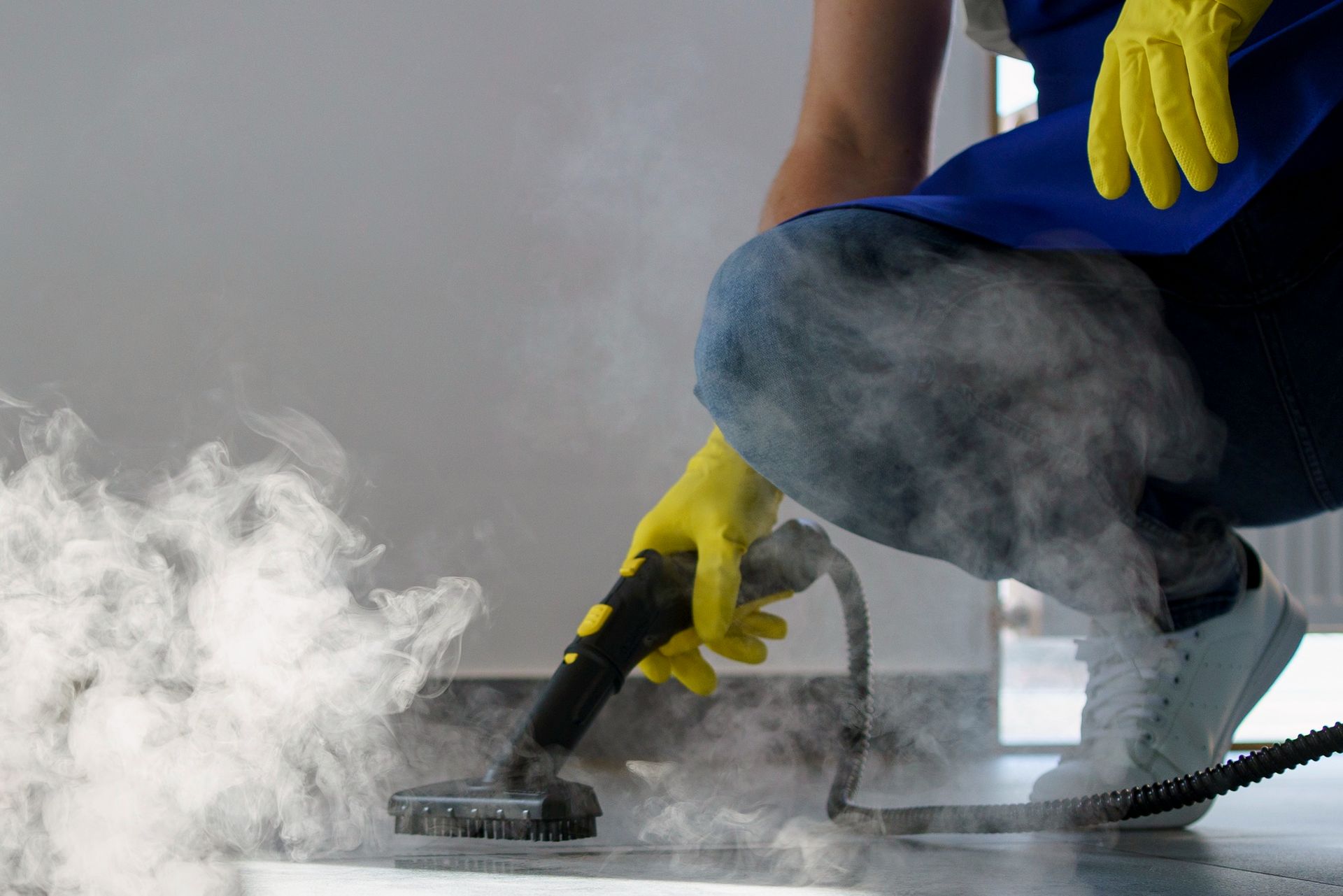
Steam mops aren't the preferred cleaning method for travertine. Heat and moisture may affect certain sealers, grout, or stone installations. A microfiber mop with a stone-safe cleaner is generally a safer choice.
How do I remove cloudy marks from travertine?
First determine whether the marks are cleaning residue, mineral deposits, or etching. Residue may respond to gentle cleaning, while etching generally requires surface restoration rather than additional detergent.
Does sealing travertine stop acid damage?
No. Penetrating sealers help resist water and oil-based stains, but they don't make travertine acid-proof. Vinegar, citrus juice, and acidic cleaners can still etch sealed stone.
What is the best cleaner for travertine in Arizona homes?
A pH-neutral natural stone cleaner is ideal for everyday maintenance. ADVANCED Ultimate Floor & More Cleaner is formulated for stone, tile, and grout and is suitable for routine travertine cleaning when used as directed.
How often should travertine be resealed?
The interval depends on traffic, porosity, exposure, and the sealer used. Some surfaces may need attention after one or two years, while others remain protected longer. Periodic inspection and absorption testing help determine when resealing is appropriate.
Protect Your Travertine With ADVANCED Sealers and Cleaners
Travertine can maintain its natural beauty for decades when cleaned and protected correctly.
The most important rule is simple: avoid acidic products and use pH-neutral cleaning solutions designed for natural stone.
For routine maintenance, ADVANCED Ultimate Floor & More Cleaner helps remove everyday dirt without relying on harsh chemicals. For additional protection against staining, Ultimate Travertine Seal provides a penetrating treatment designed specifically for travertine and limestone.
At ADVANCED Sealers and Cleaners, we develop professional-grade products for homeowners, contractors, and cleaning professionals who want effective solutions for natural stone, tile, grout, and other hard surfaces.
Whether you're caring for travertine floors in Phoenix, maintaining a bathroom in Scottsdale, or protecting a patio in Chandler, choosing compatible products is the foundation of long-lasting stone care.
Explore our cleaning and sealing products at ADVANCED Sealers and Cleaners to find the right solution for your travertine surfaces.
For product questions or application guidance, call (480) 499-3145 or email Info@2GetAdvanced.com.
Keep your travertine clean, protect its natural finish, and avoid unnecessary etching with a maintenance routine designed for natural stone.